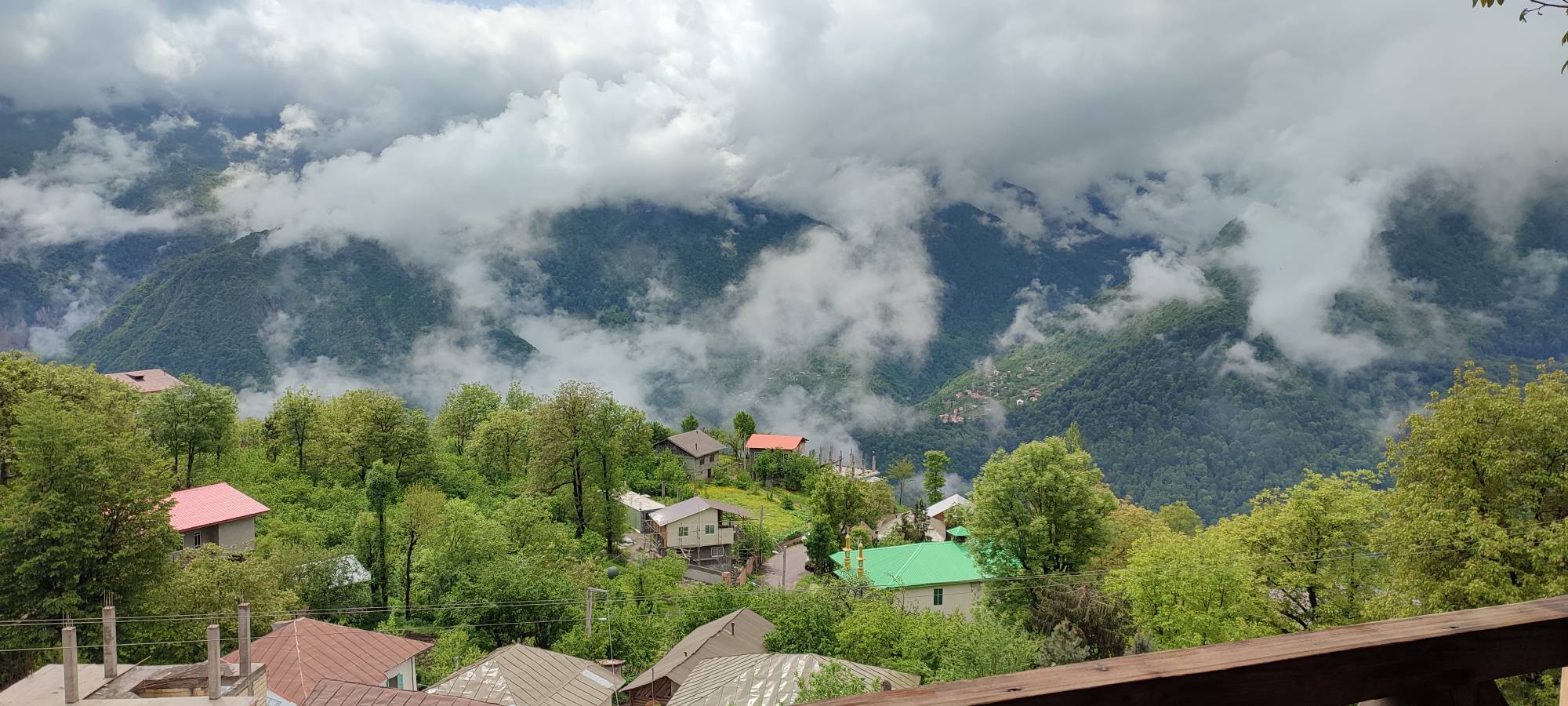
According to IRNA, the “Dohezar” road, which winds through the Hyrcanian forests, reaches a point where a village lies that today is no longer just a pleasant mountain settlement. Shaneh Tarash has now become a meeting point of several simultaneous paths: the path of nature, the path of tourism, and the path of sustainable development—flowing quietly but steadily through the fabric of the village, while at the same time taking steps toward globalization. The village has also been proposed as one of Iran’s eight candidates for registration on the World Tourism Organization’s list of global villages, and it is seriously striving to earn this international title—a status that, relying on its natural and cultural capacities and its growing infrastructural development, has placed Shaneh Tarash at the center of attention in the country’s rural tourism.
A visit to Shaneh Tarash shows that over the past year, the village has undergone remarkable visual and physical changes. Beyond the murals on the walls and such artistic touches, many infrastructural changes have also taken place. The locals say this is no longer just a village; it is a path that is gradually turning into a destination for sustainable tourism. The village head (dehyar) of Shaneh Tarash told IRNA: “Our effort has been to advance development alongside the preservation of nature, not against it.”

Shaneh Tarash has many foggy stretches that, while attractive, make travel on this route difficult for tourists and travelers. Now, on the very initial roads leading to the village, the Dohezar road—long considered a passage for tourists—has taken on a new look with the implementation of a route safety plan and road line marking. This measure has been carried out to improve traffic safety, and according to locals, it plays an important role in reducing traffic tension on busy tourist days and increasing road safety, eliminating driving concerns on foggy and rainy patches.
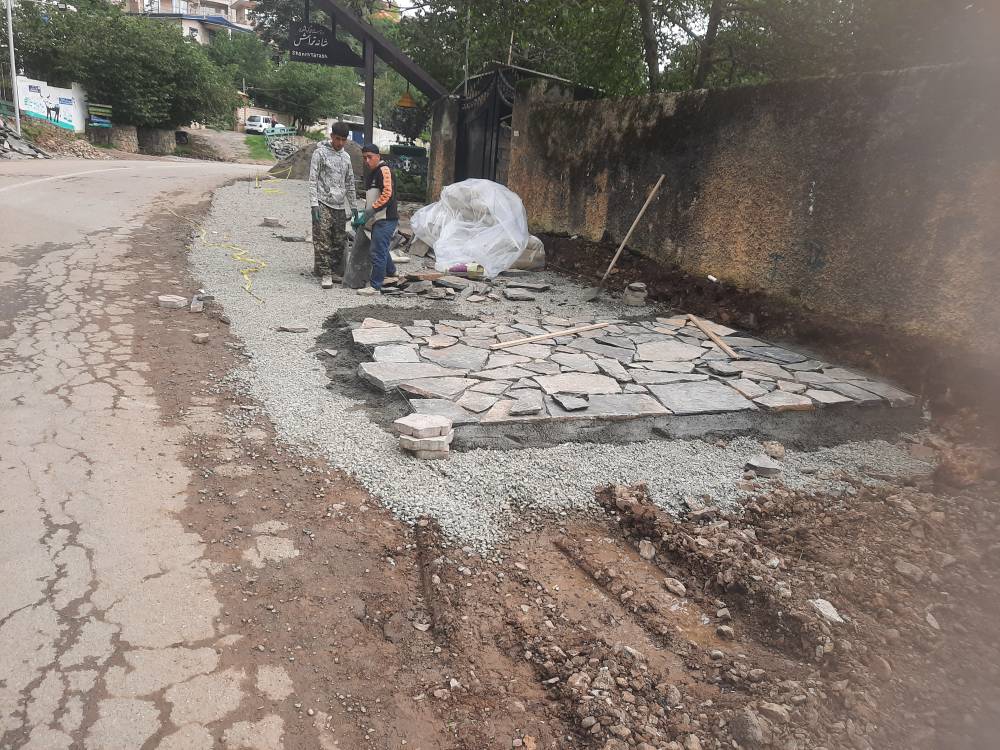
A little further ahead, the changing face of the village becomes more tangible. The stone paving of the pathways, implemented with the aim of returning to the village’s local authenticity, has transformed the alleys from dirt and worn-out roads into a more orderly space that harmonizes with the traditional fabric—a change that has both improved the quality of movement and preserved the feeling of rural life within the new context.
In terms of vital infrastructure, according to a report from the county gas department, the village gas supply project began in 2018 (1397) and was put into operation in 2021 (1400) with a budget of approximately 300 million tomans. One resident said about this: “Before gas, winters were hard; now things are very different.” This project, in addition to improving household welfare, has also played a role in enhancing tourism infrastructure.
At the same time, the village’s electricity network has been developed over the past decades and today operates as one of the main pillars of public services and tourism in the region. According to locals, street lighting and power stability have made tourists’ presence at different times of day and night safer and more comfortable.
But perhaps the most important part of Shaneh Tarash’s transformation can be seen in the reconnection of humans and the forest. Under a conservation memorandum of understanding between the Natural Resources Department and the village administration, two parks have been established in the village area: the first park, covering 1.5 hectares, at the village entrance, and the second, covering 3 hectares, at its end. These parks have been created within natural areas and, in addition to their touristic function, play a protective role in managing access to the forest.

In this context, Shaneh Tarash is known as the first green village in the region, where all residents participate in forest protection through the “Nature Helper” plan. The implementation of the seedling planting campaign and planting of native Hyrcanian species, holding educational workshops including grazing management, sustainable development, and empowerment of rural women, as well as the development of wood farming, have been part of changing the people’s view of the forest—a shift from mere exploitation to shared protection.
Following this process, the establishment of a natural resources protection post, the installation of monitoring cameras, and the naming of “Jungleban Street” (Forester Street) also show that the protection of Hyrcanian areas in this village has become a sustainable structure.
In the development sector, visiting the old and traditional fabric of the village and examining local capacities, including handicrafts and dairy products, has been carried out simultaneously with the implementation of projects by the Islamic Revolution Housing Foundation, including opening up thoroughfares, relocating networks, sub-base preparation, asphalt paving, and stone paving, with a budget of about 40 billion rials. According to local officials, these measures together have improved access, enhanced quality of life, and increased the village’s tourism appeal.
Today, Shaneh Tarash stands at a point where development is defined not against nature, but alongside it; a village that has emerged from the heart of the Hyrcanian forest and strives, on this very path, to both make life easier and preserve nature.
According to IRNA, Shaneh Tarash today is an example of an emerging model in northern Iran, where route safety measures, a return to local identity through stone-paved pathways, the development of gas and electricity infrastructure to improve quality of life, and alongside all this, participatory protection of the Hyrcanian forests, have all been placed on a single path. A path that, if continued, could turn Shaneh Tarash from a tourist village into a successful experience of sustainable development in the heart of nature.